CASE STUDY 01 — SOP & KNOWLEDGE MANAGEMENT SYSTEM
SOP & Knowledge
Management System
Transformed a large, fragmented SOP and documentation library into a
more structured knowledge system with clearer classification, tracking,
and operational organization.
THE CHALLENGE
A growing documentation library needed more than folders.
The project involved 250+ SOPs and operational documents that needed a clearer way to be inventoried, classified, reviewed, and maintained.
The challenge wasn’t simply organizing files. The information needed a practical structure so people could find what they needed, understand how processes connected, and keep the library useful as the business continued to grow.

Large Documentation
Hundreds of SOPs and supporting files needed a consistent way to be inventoried
and organized.

Inconsistent Structure
Documents varied in format, category, completeness, and how easily they could
be located or maintained.

Information needed to become operational
The library needed to support real work — not simply exist as a collection of documents.
BEFORE
A lot of information.
Not enough structure.

Scattered SOP Library
Multiple categories · inconsistent naming · unclear status
Processing Question
What is complete? · What needs review? · Where does it belong?
Knowledge Gaps
Multiple categories · inconsistent naming · unclear status
MY APPROACH
A structured system, built for real use.
I took a systematic and practical approach to transform the existing files into an organized, searchable, and easier-to-maintain knowledge system. The focus was not just on organizing documents, but on creating a structure that supports daily operations and long-term growth.
AUDIT
Reviewed and mapped all existing SOPs and documents.
CLASSIFY
Grouped & categorized files based on content, function, & relevance.

STRUCTURE
Built a clear folder structure and naming conventions.
STANDARDIZE
Created consistent templates, formats, and documentation standards.
TRACK
Set up a system to monitor status, updates, and missing documents.
MAINTAIN
Established a structure that can be updated & sustained over time.
THE SYSTEM I BUILT
From a document collection to an operational knowledge system.
The finished system brought structure to how information was classified, documented, tracked, and maintained. Each part was designed to make the knowledge library easier to use—not simply easier to store.
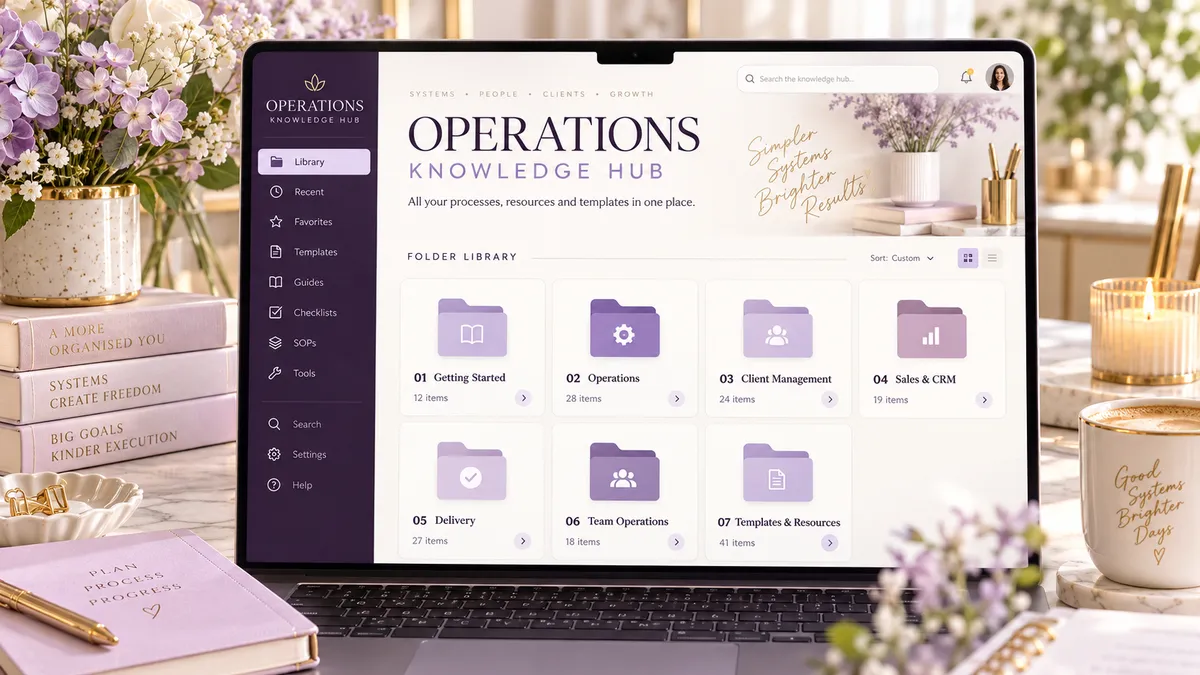

Knowledge Library Architecture
Created a clear hierarchy for organizing operational knowledge by function, purpose, and use—making information easier to locate and maintain.
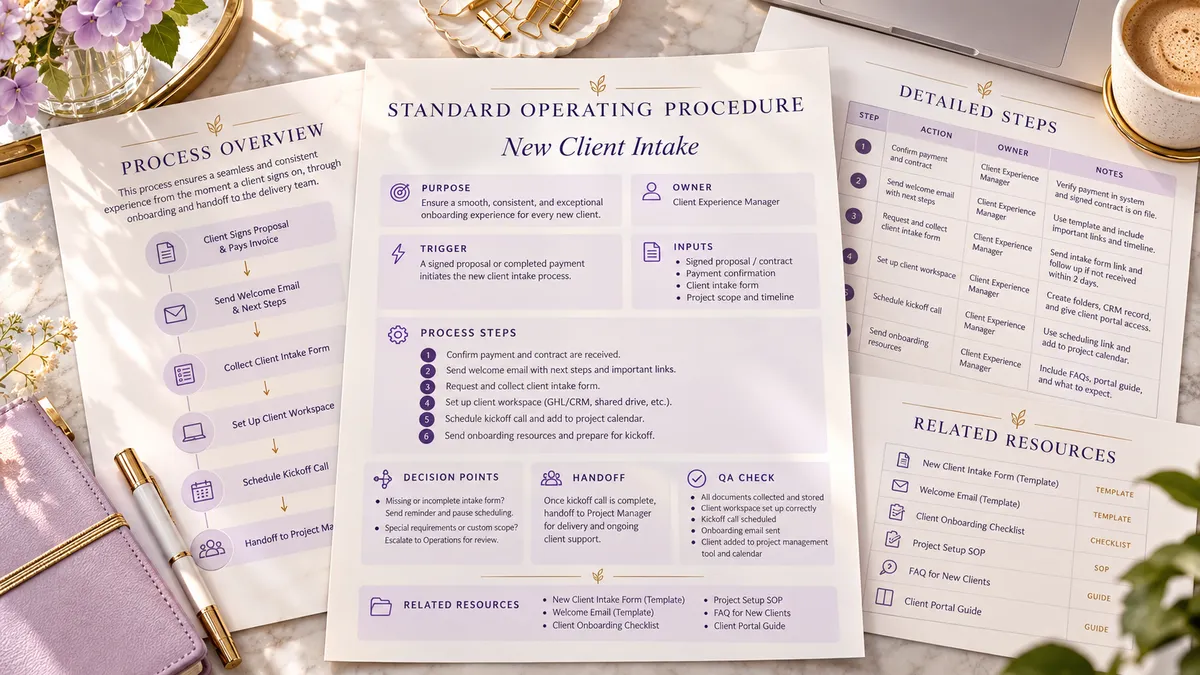

SOP & Playbook Standard
Developed a more consistent documentation structure so each process could communicate not only the steps, but also ownership, context, decision points, and handoffs.
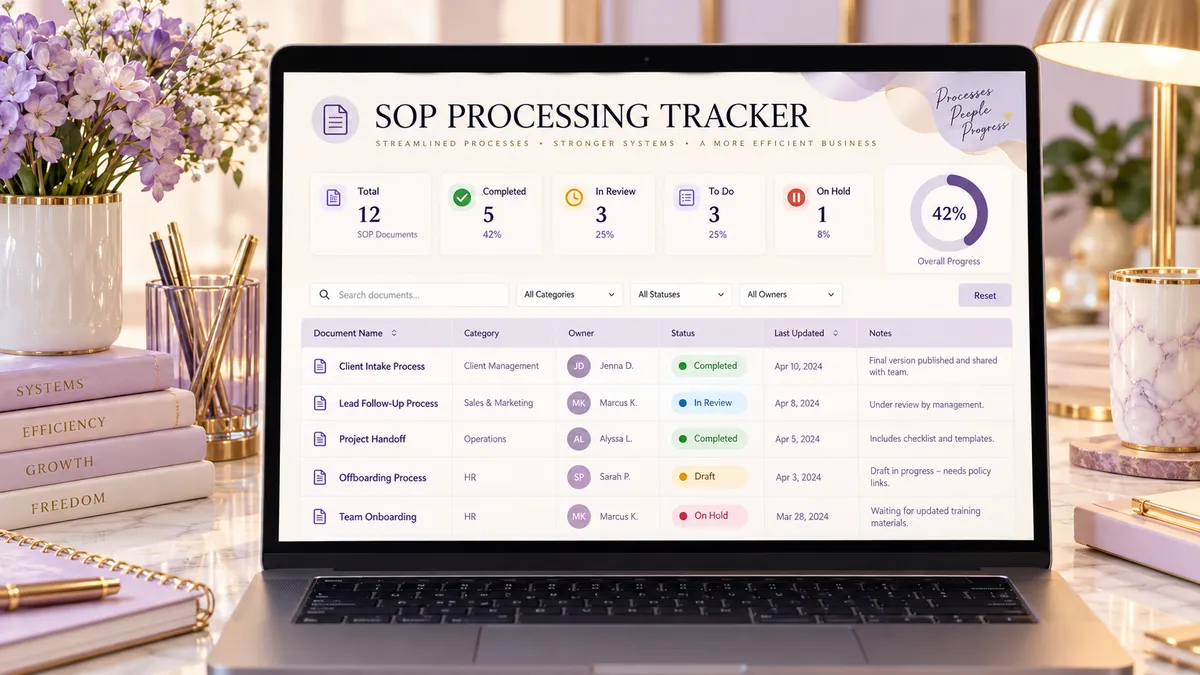
Processing & Status Tracker
Created visibility around what had been reviewed, categorized, completed, or still required attention so progress could be monitored systematically.
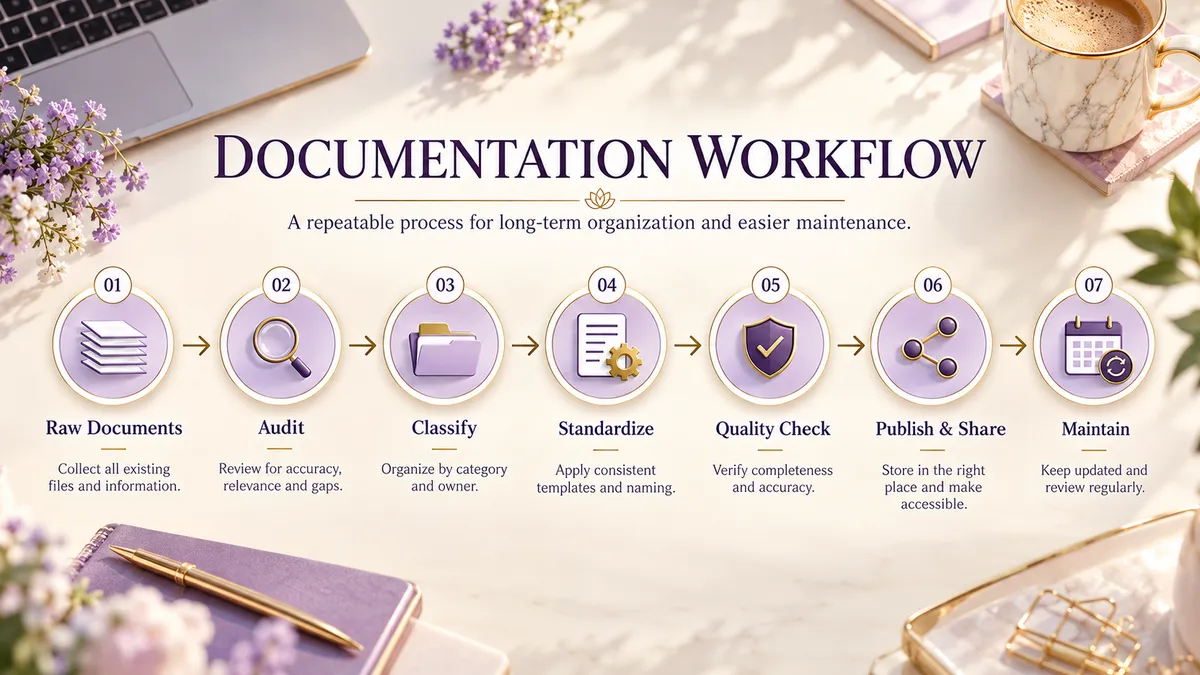

Documentation Workflow
Defined a repeatable path for processing and maintaining documentation so the library could continue evolving without returning to disorder.
Portfolio examples above are recreated representations based on the systems and methods used in the project. Client-identifying information and proprietary materials are not displayed.
THE OUTCOME
From scattered information to a system people
can actually use.
The result wasn’t simply a cleaner collection of folders. The project created a clearer way to organize, document, track, and maintain operational knowledge as the library continued to grow.
BEFORE
Scattered documentation.
Harder to manage.
Scattered SOP documentation
Inconsistent organization
Difficult information retrieval
Limited process visibility
AFTER
A Structured System that Works
Centralized knowledge system
Clear SOP structure
Faster document access
Repeatable Documentation Worklow

Findability
Information became easier to locate through clearer categories, hierarchy, and naming conventions.

Consistency
Processes could be documented using a repeatable structure instead of varying formats and levels of detail.
Visibility
Processing status became easier to monitor, showing what was complete, under review, or still needed attention.

Maintainability
The library gained a repeatable approach for future updates instead of relying on one-time cleanup.
The biggest improvement was not simply having more organized files—
it was creating a knowledge system that could continue supporting the business after the initial organization work was complete.
SKILLS & CAPABILITIES
What this project demonstrates.
This project brought together operational thinking, documentation, organization, and systems design to turn a growing information library into something more structured and usable.

SOP Development
Creating clearer, more consistent process documentation that communicates purpose, ownership, steps, handoffs, and supporting resources.

Knowledge Management
Creating clearer, more consistent process documentation that communicates purpose, ownership, steps, handoffs, and supporting resources.
Process Design
Looking beyond individual tasks to understand how work moves, where gaps exist, and how processes can become more practical and repeatable.

Operational Organization
Turning scattered files, resources, and information into a structured system that supports day-to-day operations
.

Workflow & Status Tracking
Creating visibility around what is complete, under review, missing, or ready for the next stage of work.


AI-Assisted Documentation
Using AI tools thoughtfully to support classification, drafting, review, and documentation work while keeping human judgment at the center.
CONFIDENTIALITY NOTE
Respecting client privacy and sensitive information.
This case study has been intentionally presented with limited identifying details. The visuals shown throughout the page are recreated portfolio representations designed to demonstrate the structure, workflow, and thinking behind the work without exposing confidential client information.

Project details generalized
Names, identifying information, and sensitive project specifics are not displayed.

Confidential information omitted
Internal files, proprietary content, credentials, and private client materials remain protected.

Methods represented responsibly
The examples preserve the workflow logic and approach without reproducing confidential materials.
EXPLORE MORE
More Case Studies
Each project is different, but the goal is always the same — turning complexity into clarity and building systems that work.
CASE 01
SOP Library Transformation
From scattered files to a structured knowledge system.

CASE 02
Lead Management & Follow-Up System
A centralized CRM workflow for capturing inquiries, managing leads, and improving follow-up.
CASE 03
Organic Community Growth & Engagement
Building and managing a growing online community through structured content, engagement, and audience insights.